




Nanjing Elephant-Med instrument Co. , Ltd.
MOBILE:
ADDR:86 Shuanggao Road, Economic Development Zone, Gaochun District, Nanjing City
WEBSITE:http://www.elephant-med.com/
ABOUTUS
PRODUCTS
roduct categoryCONTACT
ontact usCommon terms for negative plates
In current medical surgical procedures, negative plates and electrode pads are among the most commonly used and essential disposable supplies in operating rooms. However, terminology varies across different regions and hospitals. Common terms used in the market include: electrosurgical negative plates, loop electrodes, neutral electrodes (a term frequently used in product registration certificates), loop plates, muscle-adhesive plates, electrode pads, and deactivated electrodes. These are all colloquial terms for negative plates.
Product Overview of Negative Plates
I. Working Principle:
Disposable neutral electrodes (electrosurgical negative plates) provide a low-resistance return path for high-frequency current during surgery, thereby forming a closed circuit. They ensure that the high-frequency, high-voltage current applied to the patient’s body is returned to the electrosurgical unit in the fastest, lowest-impedance, and safest manner possible, preventing electrical burns by maintaining a complete circuit. Proper use of negative plates ensures the safety of both medical staff and patients.
II. The Function of the Negative Plate
Negative plates are widely used in electrosurgical procedures and are designed to work with various high-frequency electrosurgical units and radiofrequency devices. Their function is to provide a complete and safe current loop for the high-frequency electrosurgical system, serving as a safe return path for the high-frequency current.
We can think of electrical current as a stream of water that requires a safe channel to flow through; the negative plate is a crucial component of this safe channel, ensuring that the current does not flow randomly through the body and cause unnecessary injury.
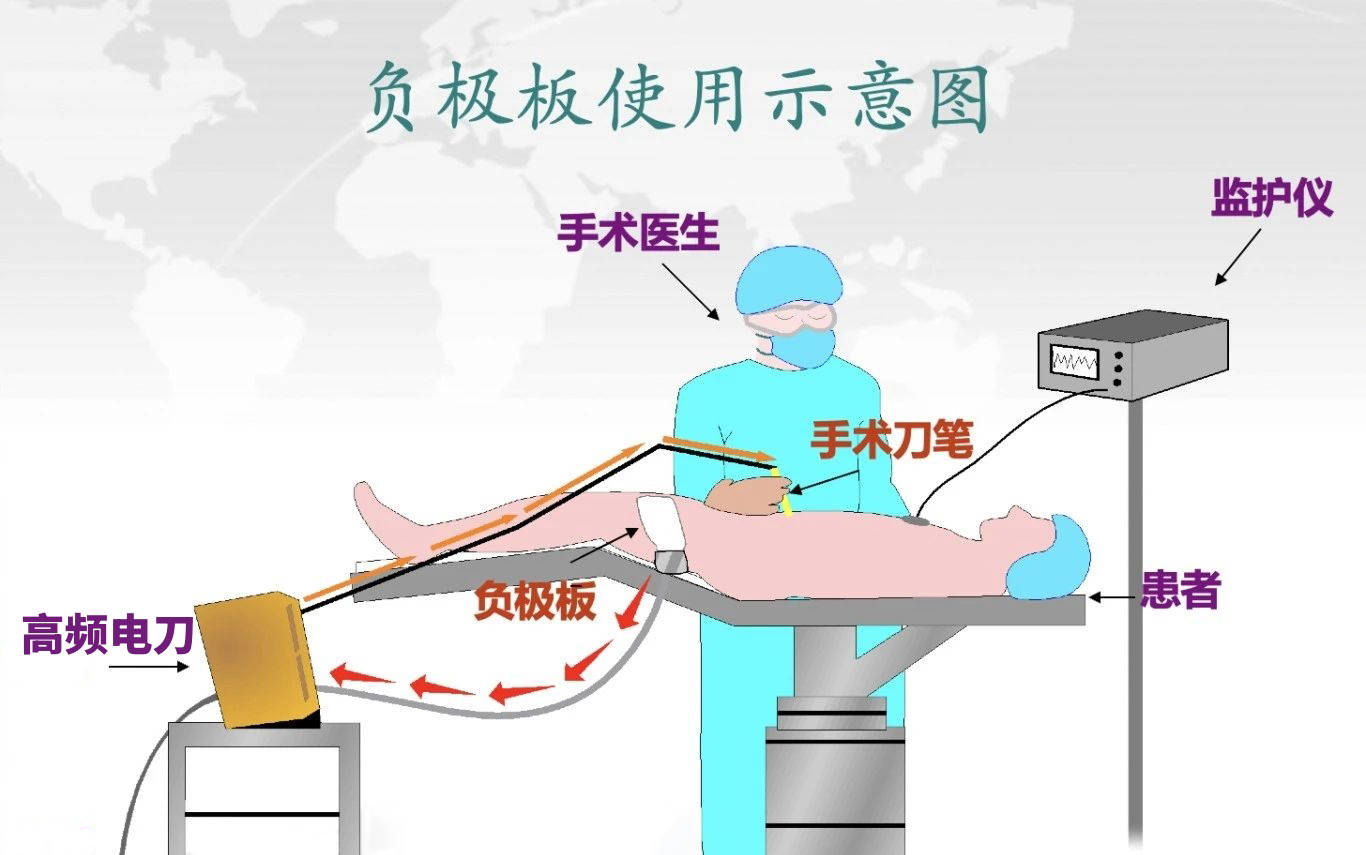
The use of a ground plate effectively reduces current density, enhances heat dissipation, distributes the current, and prevents thermal damage.
During surgery, high-frequency current passes through human tissue; the ablation electrode generates thermal energy at the target site to perform functions such as cutting and hemostasis, while the ground plate ensures that the current safely exits the body, thereby ensuring the smooth progression of the procedure.
III. Applicable Departments and Procedures:
All surgical procedures that require the use of an electrosurgical unit for cutting or coagulation must also use an electrosurgical grounding pad. This is essential in general surgery, gynecology, pediatrics, thoracic surgery, orthopedics, and other specialties.
Number of uses:
Usage: Single-use
From large tertiary hospitals to small clinics and cosmetic surgery centers, as well as research institutions and training facilities, all utilize electrosurgical consumables in surgical procedures.
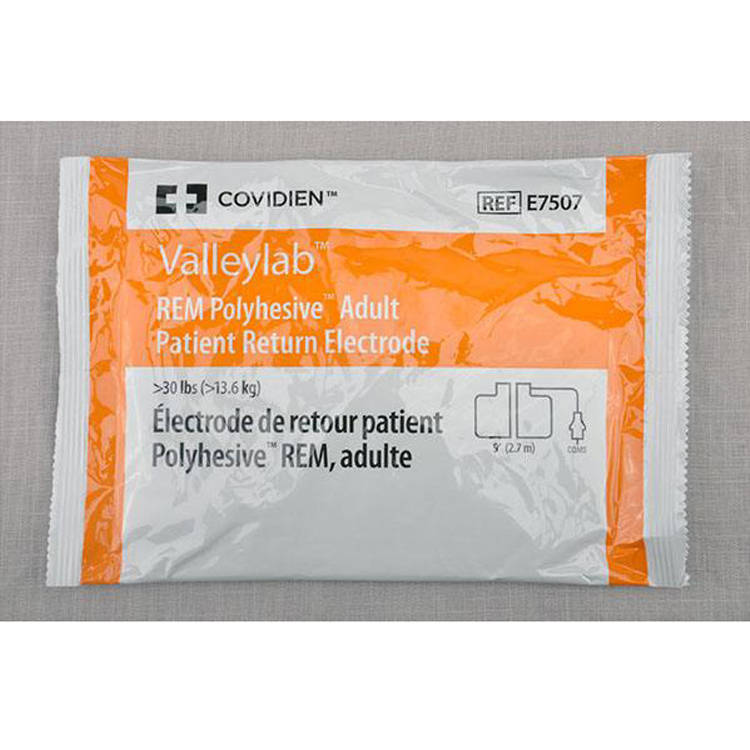
There is a wide variety of negative plates available in different types and specifications. Different host units require different models and specifications, including those with or without wires, dual-circuit or single-circuit designs, and those with or without pin connectors.
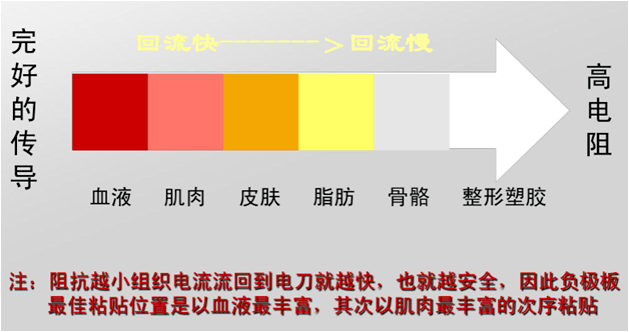
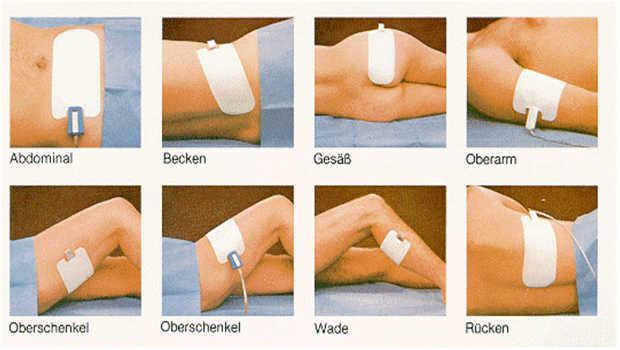
Depending on the type of surgery, there are specific requirements regarding where the negative electrode pad should be placed. This is to prevent surgical burns.
Tips for Applying the Negative Plate
There are specific techniques for applying the electrodes, and the application site must be chosen carefully.
1. Carefully read the product instructions before using the negative electrode.
2. Before use, prepare the skin surface at the intended application site by removing hair, cleaning, and drying it.
3. Before use, inspect the surface of the negative electrode pad to ensure there are no wrinkles or foreign objects and that the adhesive is evenly distributed. Then, firmly attach the negative electrode pad to a clean, dry, and hair-free area of the patient’s skin where the muscle is firm, there are no protruding bones, and the site is as close as possible to the surgical area.
4. The negative electrode pad must not be applied to areas of broken skin.
 苏公网安备32011802010375号