




Nanjing Elephant-Med instrument Co. , Ltd.
MOBILE:
ADDR:86 Shuanggao Road, Economic Development Zone, Gaochun District, Nanjing City
WEBSITE:http://www.elephant-med.com/
ABOUTUS
PRODUCTS
roduct categoryCONTACT
ontact us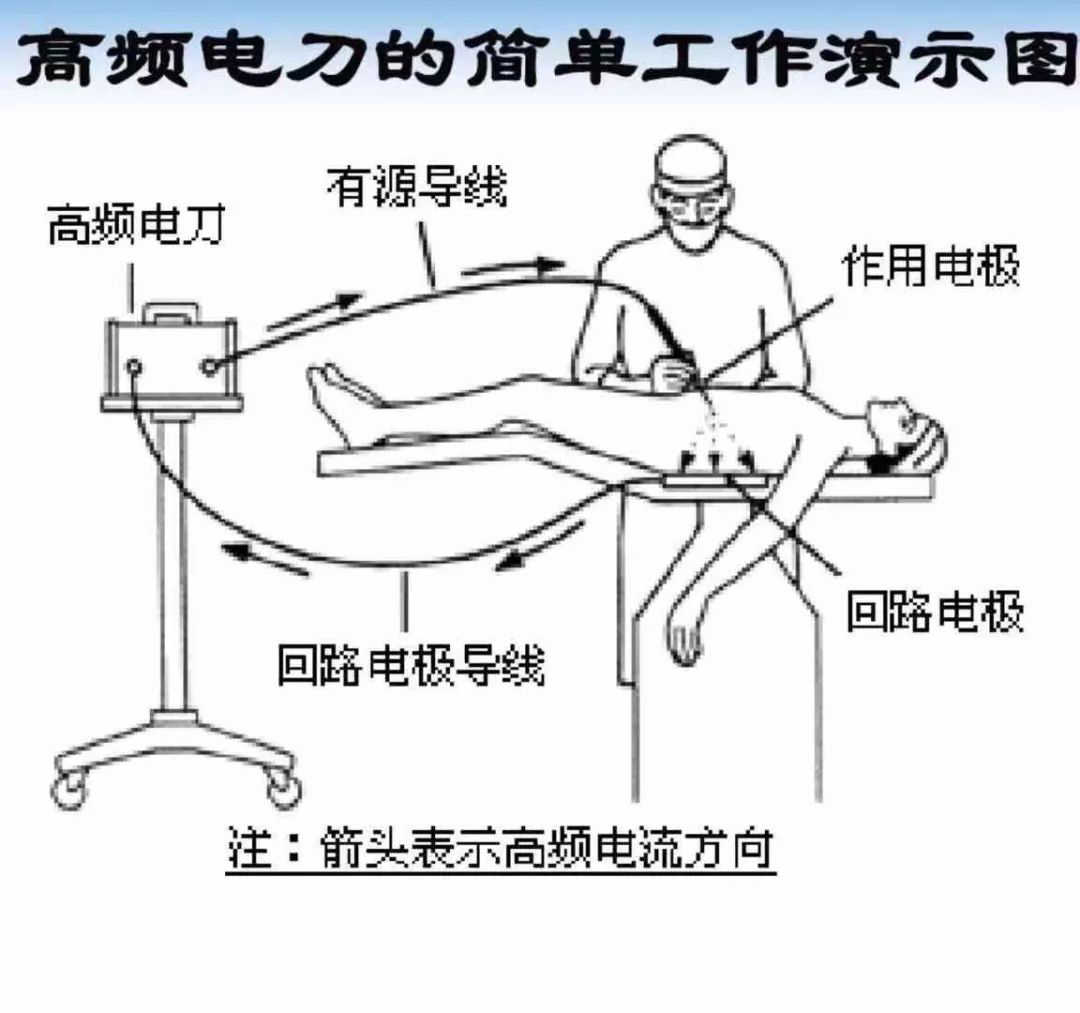
In most applications, an electric current passes through the active wires and electrodes through the patient, and then from the patient's plates and wires back to the generator of the high-frequency electrosurgical unit.
Tips and tricks
·Don't drive too big. The actual energy output varies from instrument to instrument or to different states of the same EA. Generally, electroresection and electrocoagulation do not exceed 40 watts. Principle: Adjust to the minimum power that can complete the operation. For liver metastases during ovarian cancer reduction surgery, the clotting of liver tissue can generally be turned on to 100 watts.
·Electric knife is not a knife. The principle of electric cutting is the electric spark incision caused by intermittent discharge, so the electric knife cannot be used as a knife. Keep the knife at a small distance from the tissue to produce a small, uniform spark. However, the electric knife cannot be pressed the tissue, causing tissue damage.
·The pull of the organization is very important. Be sure to raise the flap up at a 45-degree angle to allow some gap in the tissue. The electric knife walks in the gap, so that the anatomical hierarchy is clear.
·Walk speed control of electric knife. Too slowly, damage tissues; Too quickly, and it can damage vital tissues.
·Electrocoagulation when stopping bleeding. Generally, the effect of hemostasis is good when the vascular clamp is lifted with the help of vascular clamp.
·Patients with hypertrophy of subcutaneous fat should use less electric knife to avoid tissue liquefaction and necrosis, resulting in wounds that cannot heal.
·Since the action point of the electric knife is the place with the largest contact resistance, it is necessary to avoid poor contact with the ground wire connection skin, and should be reliably contacted (the area is as large as possible) to avoid burns!
·Do not try to cut open the removed specimen, because there is no circuit, it is not reacting, if there is a reaction, it is the surgeon himself, and the surgeon will be shocked!
·For some muscle-rich places, if you want to cut off the muscles, using electrocoagulation to cut the bleeding will be less, because the electrocoagulation will not cut too fast, and the current is small, so there is enough time to "carbonize" the muscles to stop bleeding. When there is a large amount of tissue clamped and electrocoagulation cannot be coagulated, the use of electroresection to stop bleeding will receive good results.
·If the deep tissue is used with an electric knife, try to use a long-handled one, only exposing the tip of the knife, so as to prevent the exposed metal knife head from damaging adjacent structures such as blood vessels and nerves.
·Be careful not to injure the epidermis with an electric knife, try not to cut the subcutaneous tissue with an electric knife, cut the subcutaneous with a scalpel, and then use electric coagulation to stop bleeding. In some areas where bleeding is not very high, cuts can be made with scissors or lancets instead of an electric knife.
·Do not touch the internal fixation when taking the internal fixation, especially the internal fixation of the spine, the electrically charged electric knife can damage the dural sac, nerve root or spinal cord------ resulting in neurospinal cord injury, and paraplegia.
Precautions: Monopolar electrosurgical unit cannot directly coagulate the blood vessels of the uterus and ovaries, which can easily lead to bleeding, and the unrecognizable anatomical structure after bleeding will damage adjacent tissues such as ureters, bladder and intestinal tubes. Blood vessels in the uterus and ovaries can be treated using a bipolar electrocoagulant or sutures.
Characteristics of ordinary bipolar electrocoagulation:
·There is no need to form a circuit with the patient's body, only the effect of electrocoagulation to stop bleeding, and there is no effect of cutting.
·The clotting site is between the two electrodes.
·Compared with the electrocoagulation function of monopolar electrosurgical knife, it is safer and has better coagulation effect.
·When dealing with uterine blood vessels or pelvic excavatum ligaments, it is better to temporarily block blood flow with vascular clamps or vascular clamps and then electrocoagulation.
·Note that the method of intermittent electrocoagulation is more effective than the continuous electrocoagulation method.
Ligasure Vascular Closure System
Although the voltage passing between the Ligasure blades is significantly lower than that of a traditional bipolar scalpel, the Ligasure blades have a significantly larger area of contact with the tissue than a traditional bipolar scalpel, and therefore allow for a greater amount of current to pass through.
The host computer senses the electrical impedance of the target tissue between the blades through a feedback control system, and when the tissue is coagulated to the optimal level, the system automatically cuts off and an audible tone alerts you that coagulation is complete.
Ligasure cutting and closing system is the application of real-time feedback and intelligent host technology, the output of high-frequency electrical energy, combined with the pressure between the electric blade, so that the blood vessel to be cut collagen and fibrin melting denaturation, the wall of the blood vessel fusion to form a transparent band, resulting in permanent lumen closure.
The Ligasure Vascular Closure System differs from ordinary bipolar systems in that it has a blade switch that can be pressed to push out the included blades to cut the coagulated tissue.
The advantages of Ligasure are:
·Closure of vessels up to 7 mm in diameter (theoretical);
·Closure of vessels in tissue without excessive separation;
·The resulting closure band can withstand pressures in excess of three times the normal body systolic pressure;
·Fast closure, no smoke, no interference with the surgical field;
·No odor and no carbonization during closure, so no foreign matter such as sutures and titanium clips remain after closure;
·The local temperature is not high during closure, heat diffusion is small, and the heat conduction distance is only 1.5~2 mm, which is not harmful to the surrounding tissues.
Ligasure is more efficient than traditional bipolar scalpel, especially suitable for laparoscopic and open oncologic surgery, which greatly improves the safety of surgery.
Points of Attention:
Clamping tissue should be less rather than more, preferably 1/2 to 3/4 of the length of the cutter head, for the pelvic funnel ligament should be coagulated twice before cutting, uterine blood vessels, if the nakedness of the case is very good, first use vascular clamps or vascular clamps to temporarily block the blood flow, you can once coagulation and cutting, of course, intraoperatively according to the patient's actual situation to be dealt with.
Ultrasonic knife on the surrounding tissue damage is far less than the electric knife, its precise cutting action, so that it can be safe in the important organs and large blood vessels next to the separation of cutting, and less smoke and less scorching scabs so that laparoscopic surgery vision is clearer, shorten the operating time, no electric current through the human body so that the operation is safer, reducing the occurrence of complications.
The treatment of intra-abdominal flaky adhesion and mesentery, which is difficult and time-consuming to use electric knife, becomes easier to deal with with ultrasonic knife, which reduces the difficulty of surgery and intraoperative bleeding, and is more in line with the principle of tumor-free tumor surgery.
When used, the temperature of ultrasonic knife head is lower than 80℃, the propagation distance around is less than 5 micrometers, and it seldom produces smoke, crust, no electric spark, and no electrophysiological interference to the organism. Compared with the electric knife commonly used in general surgery, ultrasonic knife has the advantages of precise cutting, firm hemostasis, strong controllability, etc., and its safety and effectiveness are better, so it is more advanced.
Factors affecting the hemostatic effect of ultrasonic knife cutting:
·The working gear of ultrasonic knife: high gear - cutting; low gear - coagulation; coagulation first and then cutting;
·Tension of tissues during ultrasound knife cutting: non-vascular tissues, increased tension, fast cutting speed. Vessel-rich tissue, reduced tension, good coagulation;
·Pressure of tissue clamped by ultrasonic knife: high pressure - fast cutting; low pressure - good hemostasis;
·Selection of working surface of ultrasound knife: sharp surface-fast cutting; blunt surface-good hemostasis.
·Try to use the first 1/3 to 1/2 of the ultrasonic knife head to clamp the tissue, in order to stop bleeding and cut off the tissue in the jaws in one go.
·Common improper or incorrect operation of ultrasonic scalpel
Operating under non-direct vision;
·Operating with the working blade tip close to vital organs: picking up tissue adequately, with the working surface away from the tissue, or with the non-working surface close to vital tissue;
·Large pieces of clamped tissue: fast, easy to bleed, slow, produces a lot of fog, and does not allow for fine dissection;
·Contact with metal or bone during excitation: leads to tip breakage or tissue damage;
·Long time excitation: one excitation as far as possible <7s;
·Holding a small amount of tissue for empty excitation: the cutter head is separated during the test and the tissue is moderately held;
·Working with scabs for a long time.
Note: Ultrasonic knife or regular monopolar electric knife is an (ureteral) extrasheath dissection when separating the ureter and an (vascular) intrasheath dissection when clearing the lymph nodes.
 苏公网安备32011802010375号